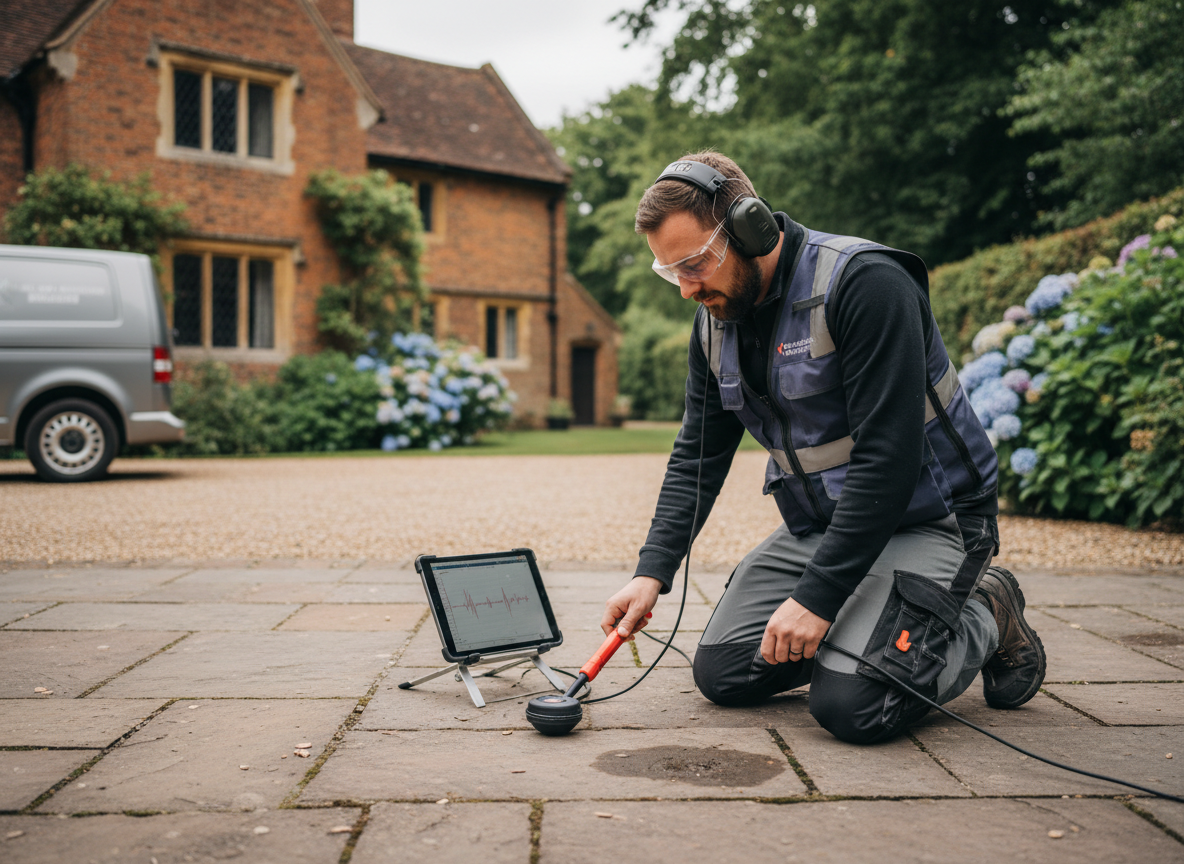
Norfolk's independent-city status means plumbing work follows its own code interpretations rather than county rules, especially around older cast-iron and galvanized lines common in Ghent and Downtown Norfolk homes built before 1950. Hot humid summers drive condensation on cold supply lines that can mimic active leaks on moisture meters, so technicians cross-check readings with acoustic sensors and pressure tests before opening walls. Shifting clay soils near the Lafayette River and in Berkley add another variable, as seasonal saturation can move joints on 80-year-old mains serving Colonial Place properties.
Edge cases appear regularly near Naval Station Norfolk where vibration from heavy traffic stresses older solder joints and where mixed copper and PEX retrofits create dissimilar-metal corrosion points. In Ocean View bungalows elevated on pilings, leaks often hide in crawl spaces with poor ventilation that accelerates pipe rust. Technicians avoid invasive exploratory cuts until thermal imaging and camera scoping narrow the exact joint or fitting, preserving original plaster and hardwood floors typical of the area.
Water pressure fluctuations from the city supply during peak summer demand can mask slow drips until a shutoff test is performed. Soil conductivity around Town Point Park and the Scope arena area also interferes with some electronic locators, requiring manual listening devices instead. These local factors make generic national leak-detection protocols unreliable without adjustments for Norfolk's housing age and waterfront proximity.
Technician insight
In Norfolk the thing that catches most people out with Leak Detection is the way heavy summer rains saturate the clay around 1920s cast-iron lines in Ghent, giving false moisture readings that only a shutoff pressure test can separate from an actual leak.
Hidden line leak in Colonial Place
A homeowner noticed a sudden drop in water pressure and damp soil near the front walk. Scanning showed no interior moisture but acoustic readings pointed to the front yard. We isolated the main and confirmed a joint failure on the 1940s galvanized line. The section was replaced through a narrow trench, restoring full pressure without disturbing the brick walkway.
Leak Detection Services We Offer
✓Slab Leak Detection
Locates leaks under concrete slabs in Ghent and Berkley homes using acoustic sensors and thermal imaging to avoid unnecessary floor removal.
✓Underground Water Line Leak Detection
Traces leaks on service lines from the street to the meter in older Ocean View and Colonial Place properties where clay soil movement is common.
✓Fixture and Appliance Leak Detection
Isolates slow leaks at toilets, sinks, and water heaters in Downtown Norfolk buildings where access is tight and original fixtures remain.
✓Crawl Space and Foundation Leak Detection
Checks elevated homes in Ocean View and Berkley for moisture intrusion around piers and sill plates before wood rot sets in during humid months.
✓Pressure Loss Leak Detection
Diagnoses unexplained pressure drops in multi-story homes near Naval Station Norfolk caused by hidden branch-line corrosion.
Leak Detection Cost in Norfolk, VA
| Service | Typical Range | What Affects It |
|---|---|---|
| Fixture or appliance leak scan | $175–$350 | Higher when multiple floors or finished basements are involved |
| Main water line detection | $300–$550 | Increases with yard depth and landscaping restoration needs |
| Slab or foundation leak mapping | $450–$750 | Depends on square footage and whether thermal plus acoustic tools are required |
| Crawl space moisture survey | $225–$400 | Higher in homes with limited access or heavy insulation |
Ranges are typical for Norfolk, VA and confirmed with an exact written quote before any work starts.
How it works
- 1
On-Site Assessment
Review water bill history and visible symptoms while walking the property in the specific neighborhood to note construction era and pipe materials.
- 2
Non-Invasive Scanning
Deploy acoustic, thermal, and moisture tools to narrow the leak zone without cutting into walls or slabs.
- 3
Confirmation Testing
Isolate sections with shutoff valves and perform pressure tests to verify the exact leak location.
- 4
Access And Repair Plan
Provide a written scope showing the least invasive entry point and estimated restoration needs.
Pricing
Most leak detection calls in Norfolk fall between basic fixture checks and full-slab mapping; exact cost depends on access difficulty and number of lines tested.